Call today for a free consultation!

CALL NOW!
931-210-6500
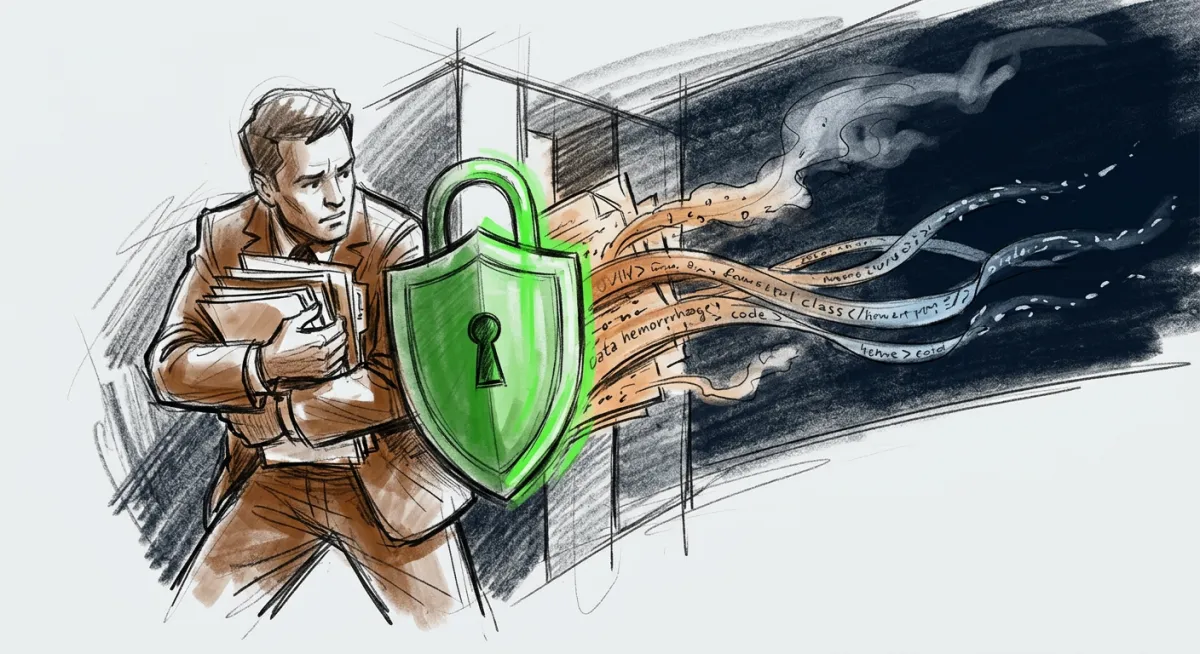
Ransomware 2.0: The Shift from Encryption to Data Exfiltration Extortion
Here's something that should keep you up at night: the ransomware playbook has completely changed, and most businesses are still defending against the old version.
A few years ago, ransomware was straightforward — criminals encrypt your files, demand payment, and maybe you get your data back. Today? That's just the appetizer. According to recent threat intelligence, 87% of ransomware incidents now include data exfiltration. That means the attackers aren't just locking your files — they're stealing them first. And that changes everything about how you need to think about ransomware prevention and data exfiltration defense.
Why Backups Alone Won't Save You Anymore
I've had this conversation with countless business owners: "We're good on ransomware — we have backups." Five years ago, that was a solid answer. Today, it's dangerously incomplete.
Here's the problem. When attackers only encrypted your data, a good backup strategy meant you could wipe the infected systems, restore from backup, and get back to business without paying a dime. Criminals adapted. They realized that if they steal your data before encrypting it, they have leverage even if you have perfect backups.
Think about it. You restore from backup, refuse to pay the ransom — and then they threaten to publish your customer data, your employee records, your financial information, your trade secrets. Suddenly, the calculation changes completely.
This is what security researchers call "double extortion," and it's now the standard playbook. Some groups have moved to "triple extortion" — adding DDoS attacks or directly contacting your customers and partners to pressure you.
What Data Are They Actually Stealing?
I've seen this with my own clients. The attackers know exactly what hurts most:
Customer information — Names, addresses, payment details, Social Security numbers. This is gold because it creates legal liability for you and identity theft opportunities for them.
Employee records — HR files, W-2s, direct deposit information. Your employees become collateral damage.
Financial data — Bank statements, accounts receivable, pricing documents. This data can be sold to competitors or used for business email compromise scams.
Contracts and intellectual property — Client lists, proposals, proprietary processes. Even small businesses have data that competitors would love to see.
Email archives — Years of communications that might contain embarrassing information, evidence of disputes, or additional credentials.
The attackers typically spend weeks inside your network before deploying ransomware. During that time, they're quietly compressing and exfiltrating everything valuable. By the time you see the ransom note, your data is already sitting on their servers.
The New Approach to Ransomware Prevention Data Exfiltration Defense
If your entire ransomware defense strategy is "restore from backup," you need to rethink your approach. Here's what actually matters now:
Stop the Breach Before It Starts
Most ransomware attacks begin with one of three things: a phishing email, an unpatched vulnerability, or stolen credentials. Your first line of defense is making it harder to get in.
MFA everywhere — Multi-factor authentication on every account that supports it. If an attacker gets a password, MFA stops them cold.
Email filtering — Modern email security that catches phishing attempts before they reach inboxes. This is your single highest-ROI security investment.
Patch management — Automated patching so vulnerabilities don't sit open for weeks. Attackers scan for known vulnerabilities constantly.
Detect the Attacker During the Dwell Time
Here's the opportunity most businesses miss: attackers typically spend 10-21 days inside a network before deploying ransomware. That's your window to catch them.
Endpoint detection and response (EDR) — Modern security tools that watch for suspicious behavior, not just known malware signatures.
24/7 monitoring — Because attacks happen at 3 AM on Saturday, and you need someone watching.
Network monitoring — Detecting unusual data flows that might indicate exfiltration in progress.
Limit What They Can Steal
Even if an attacker gets in, you can limit the damage:
Data classification — Know what data you have, where it lives, and who has access. You can't protect what you don't know about.
Least privilege access — Users should only have access to the data they need for their job. If the accounting department gets compromised, the attackers shouldn't be able to reach engineering files.
Network segmentation — Don't let an attacker who compromises one workstation roam freely across your entire network.
Prepare for the Worst
Despite your best efforts, breaches happen. Have a plan:
Incident response plan — Written down, tested, not gathering dust in a drawer. Who do you call? What are the first steps? Who makes decisions?
Cyber insurance — Make sure your policy covers extortion and data breach notification costs, not just ransomware payments.
Legal and PR readiness — Know your breach notification obligations and have templates ready. You don't want to figure this out under pressure.
The Hard Truth About SMB Targeting
Here's what frustrates me: I talk to small business owners who think they're too small to be targeted. "Why would criminals bother with us when they could go after the big companies?"
The answer is simple — you're easier. Large enterprises have security operations centers, dedicated security teams, and million-dollar budgets. Small and medium businesses often have antivirus software and hope. Attackers know this. They cast wide nets, and SMBs get caught because they have fewer defenses.
The good news? The same strategies that protect large enterprises can be adapted for smaller businesses. You don't need a fortune — you need the right tools, properly configured, and someone watching.
Moving Forward
Ransomware prevention data exfiltration defense isn't about buying one magic product. It's about layers — making it hard to get in, detecting attackers when they do, limiting what they can access, and being ready to respond. The attackers have evolved their tactics. Your defenses need to evolve too.
The businesses that take this seriously now will be the ones that avoid the nightmare scenario later — the ransom demand, the data leak threat, the breach notification letters to every customer.
Not sure if your business is protected? Contact us for a no-pressure consultation. Let's take a look at where you stand and what it would take to close the gaps.

Pinnacle IT is a Managed Service Provider located in Crossville, TN. We provide remote monitoring, management, help desk support, on-site support, backup and disaster recovery, Microsoft licensing, and much more.